Morning Reflection # 658: The Unequal Equivalence

If you were to ask a Buddhist what death is like, and they answered honestly, they would tell you that they don’t know, but that they believe they have been through it many times. If you ask them how they feel about it, and if it again they were honest, what you would probably get is a mixture of anticipation, anxiety and acceptance.

For most people, the fear of death is what keeps them alive, but barely.

Because as humans we tend to emotionally connect so many things to our fear of death. For many people, the fear of public speaking is almost worse than their fear of death, because an imagined failure speaking in public represents the death of their ego, and a wound to their sense of self that they believe they cannot survive.

Yet for some, the death of the ego is a step on the path to the realization of self.

For some, the fear of bankruptcy is tightly bound to a fear at the death of their self-respect, their own sense of their place in the world and how they are viewed by others. Yet for some, a bankruptcy would be viewed as merely an opportunity didn’t work out. It’s not personal, it’s just a product of the situation and the outcome of chance.

Whether or not we tie any outcome to our fear of death is actually a choice, but it is one that most make so subconsciously that they don’t realize there is an option.

Someone who I respect highly recently made the comment that unless it is fatal, all ‘failure’ is just a psychological benchmark. It took me a while to break that down, and understand that he is actually right. Unless something actually kills you, all it did was violate a set of beliefs or “rules” that you have in your head about how the world operates, and your place in the universe.

So much of our “reality” is just simply the set of rules or beliefs that we have accepted without question.

And many of these acceptances occur when we are so young that we really don’t have a language or an understanding to question them. We just go blindly through our lives following a philosophical map that was likely given to us by well-meaning people who hadn’t yet figured out that that map had been given to them by well-meaning people, who had received that map from well-meaning people.

I once read that Dogma (religious or philosophical) is merely the beliefs of dead people that you haven’t had the courage to question.

And if you know me, questions are everything.

In my work as a coach, I am often faced with the daunting task of helping somebody realize that the outcome they are “afraid of” is not in fact the death of anything, other than some psychological or philosophical map that they had in their head. I frequently ask people “What’s The Damage?”, and with the right questions, and a significant amount of kindness, we journey together through their beliefs, helping them understand that they are more than they thought they were.

And that the “little death” that they were afraid of, was really just something they were afraid to let go of.

As human beings we cling to just about everything. We cling to relationships that barely meet our needs. We cling to a job that sucks the soul out of us slowly, immeasurably, imperceptibly. We cling to the beliefs and attitudes that were passed down to us not because we have examined them, but because we are too afraid of the “death” of all that is familiar.

We are often too afraid of the death of all that is “right” that we spend most of our time being wrong.

Make no mistake, the real death we should be worried about is the death of the joy of life, the spark of passion and the moment of wonder. The death of connection with another human being, the death of the good opinion of ourselves.

Because in the end, death will come for all of us. The only thing that will matter is how much you let go of so that you could really enjoy who you are.

— Dr. Alan Barnes
@maddrbmusings

[Morning Reflection # 657: In Communion of the Sun

We gathered in small groups, nothing planned, not knowing each other. There was no text sent, no coordination of the moment. Each of us drawn to the same location by something so instinctual, so deep and unspoken, that seeing each other there was no surprise. No words were spoken outside of our own groups, yet there was in that moment a shared kinship, a common humanity.

To watch the simple act of the Sun sinking below the horizon.

The location we had all chosen was incredible. Nestled deep on the Oregon coast is a small town called Depoe Bay. It is a spot where you can see whales (or at least their water spouts) from the shore, as we had done earlier that day. At the Northern end of town there is a small cove, and outlying that some rocks and a shoreline, providing a perfect place to watch that most everyday miracle that we take far too much for granted.

The air got cooler, the light faltered, and then silently and swiftly, the Sun fell below the horizon.

It's easy to forget that in reality, the Sun is not changing its position, but we are. Captive to a rock floating in space, we are controlled by its rotation as it traverses the night sky. We are the ones spinning into the quiet embrace of night, where, for a small period of time, our view of the sun will be blocked by the very planet on which we depend upon.

Yet for some reason, unspoken and unbidden, we gathered on the rocks to see the fading of the light.

I don't know exactly how much of this reaction comes from the genetic heritage that we share with some of the other primates on this world, nor how much of our reaction to this moment is a result of the very small amount of our DNA that makes us human. I think to examine the reasons and the motivations in some way strips the majesty and the meaning of the moment.

A sunset, beautiful and simple, needs no words to explain it, for none can express its grandeur in a way that would bring justice to the attempt.

But I think, in some small way, the slipping of the Sun below the horizon reminds us that we are a very small part of a very large universe. Many years ago I was privileged to sit with some friends as we moved through a partial solar eclipse. I remember very vividly how the air got colder and the sky got quieter as the moon slowly, inexorably, crossed into the light of the sun.

And in that moment, it became very clear to me that I was a small, but still significant, part of something so very much larger.

And so was everybody else.

That moment has stuck with me ever since. Our shared humanity is not just a function of our heritage, but also of our ongoing experience in a confusing and confounding universe. We all share the same human problems, just as we all share the same ability to rise above our nature and become something more.

As we gathered together this evening I was struck not by the differences in the lives that we experienced, but by just how much our humanity bound us together to watch a sunset over the ocean. As has been done countless times before, we came together not out of greed, and not out of grandeur, but in a simple moment of respect and solitude.

Sharing with each other the testimony of the universe.

— Dr. Alan Barnes
@maddrbmusings

Morning Reflection # 656: The Little Boy Who Was Scared To Try

When he was very young, he had courage. Too inexperienced to have seen all that can happen, he believed that he could make something of himself, and so he tried to fly. However his environment was not enough to support his fledging wings, and he was brought back down to earth by some well-intentioned but bad advice from someone who was supposed to lift him up.

And so he didn’t.

Later, as he came to realize that he was different, life taught him that standing out was an invitation to pain, and so he learned to blend in, and keep a mask over his face and himself. Being something other than everyone else became something that was wrong, and so he tried hard to keep his head down, find his place and stay out of pain.

He had learned that the world didn’t much care for someone like him.

Over time, he came to believe that he would never find a place where he could truly flourish; truly find peace. Every time he stuck his head up, he got knocked back down. Instead of learning that failure is a step on the path to success, he internalized each failure as a sign that he was never going to win, never going to be allowed to find happiness.

Because he was different, he was wrong, and because he was wrong, nothing was ever going to be alright.

The difficult thing about beliefs is that the longer they reside with us, the harder they are to break away from. Year after year, he lived with that story in his soul, because it was all he could see. He had learned enough of pain and failure to feel that he deserved it, because after all, what was the universe there for but to punish the deficient?

One of my favorite authors once wrote something sort of like this: ‘You don’t need whips on their bodies when they have chains in their heads’.

The dangerous things about beliefs is that we tend to interpret everything through the lens of that which we believe. Instead of experiencing life with wonder, he came to see it with trepidation and fear. People often ask ‘if you knew you couldn’t fail, what would you try’, but they never stop to consider those who are trying, even though they secretly believe they can never succeed.

In a world where success is the ultimate endowment of ‘goodness’, the courage to try is very rarely mentioned, and even more rarely applauded.

As he grew into a man, the belief grew with him. He found himself trapped in a hell that he felt was of his own making; a very personal purgatory that seemed as deserved as it was deliberate. Even though he knew he was capable of doing, he lived with the ingrained reality that he was never going to be good enough, and would never be allowed to succeed.

But since he shared this with nobody, because he didn’t want to reveal his deficiencies, he had no-one who could make him believe otherwise.

Over time, he began to understand that the way he saw things, the way he believed things to be, was probably not exactly how they really were. And since it seemed that his life was not a permanent vendetta from the universe, he transitioned his beliefs into something more personal, and yet more damaging.

Because if the universe wasn’t doing this to him, then he alone was responsible for doing this to himself.

The transition of belief is a fascinating thing to watch. It’s remarkable how people can switch one concept of belief to another, and yet at the core, the message, or the meaning, remains the same. As the boy now man moved from one step to another, he danced with reality in such a way that he never had to question the underlying outcome of the way he framed his experiences.

And yet the way we truly escape the corrosive beliefs that hold us back is not only through questions, which are always important, but through experience. To question reality is to seek answers, and answers are merely the interpretation of an experience. Sometimes those experiences will push us forward, while some will try to drag us back into the past.

For the man who was a boy, the past was painful, the present uncertain, and the future clouded by the presence of hope and fears.

He who has yet to feel the warmth of the rising sun can trust only in the small light that he sees early in the morning.

And continue walking in the hope of a better day to come.

— Dr. Alan Barnes
@maddrbmusings

Morning Reflection # 655: Organic

This winter season, I’ve been trying to rest more. After so many years of trying to push through the December through February lethargy, I finally realized that this is the time my body is supposed to want to rest and repair. So I’ve been trying to nap more, slow down, and try to find some peace in the moments between the chaos.

I guess after all my years on this planet, I’m finally realizing that if you have to keep pushing, you might be trying to open the door the wrong way.

I’ve been meditating recently on the span of our lives, and how we grow and evolve. In my coaching work, I often spend time with clients helping them to question some of their very bedrock concepts of life, their place in the world, and the direction they are going in. Too many times we find that the path they are on was chosen for them, and not necessarily the one that they would choose.

But they were conditioned by their environment, their circumstances, and even the very nature of the language they were taught to speak.

Often, we discover that even the most well intentioned attempts at helping children grow can create long lasting patterns of choices and behaviors that lead to a life that doesn’t feel authentic. When you are allowing your precious existence to be modeled according to the dictates of somebody else’s opinion and beliefs, there is a growing sense of frustration, and very often a sense of failure.

Living a life that does not feel organic is a recipe for an ever growing sense of discomfort.

A few years ago, I came across an article that suggested a link between the increasing prevalence of suicidal ideation in teenagers with a lack of what is termed ‘self directed play’. In childhood that is full of social media, planned activities and increasing demands on their time (and energy) children are losing the time to find out what they like, how they feel, what they believe.

And when you are disconnected to those very basic emotional foundations, it’s easy to be blown off balance and fall into a life that feels too painful to bear.

I truly believe that the only true way to build a world of peace and possibility is to focus on trying to allow people to live as organically and authentically as possible. It has been my observation that people who are at peace with themselves rarely start trouble, and are willing to help others. For them, kindness is not ordained by scripture, or enforced by decree, but flows out of a desire to help other find the peace that they enjoy.

But to find a truly organic peace, it is sometimes necessary to let go of everything you currently know.

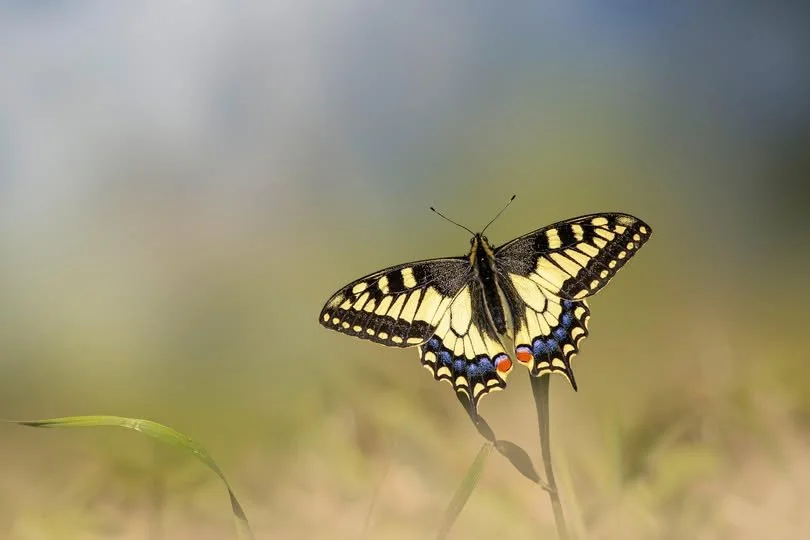
Having never conversed with a butterfly, I do not know how it feels about the process of losing its identity as a caterpillar, only to undergo a complete metamorphosis into a butterfly. If it understood the change, would it be scared or excited, worried or full of wonder? Not knowing its thoughts, I choose to believe that the caterpillar trusts in the process, and allows the process to be fully organic.

And therefore completely authentic.

Changing from who we are into a more authentic version of ourselves is never easy. It requires much introspection, a strong desire, and a deepening respect for not only your own authenticity, but of those around us. After all, if we are trying to live a life that brings us joy, meaning and peace, we have to then extend that same space to those around us.

But interestingly, the more we look inward, and find peace within, the easier it becomes to expand that peace outwards, giving others not only the space to be themselves, but the encouragement and assistance they may require. Healing and growing is never an easy process, and like the caterpillar, often requires us to let go of things we desperately cling to.

But letting go is often the prerequisite to finding something greater.

It can just hurt sometimes.

— Dr. Alan Barnes
@maddrbmusings

Morning Reflection # 654: Falling forwards

At this time of the year, we tend to widen our perspective field, looking back over the last year, and looking forward to the next. This is a practice that we can do every day, but somehow the rolling over of the calendar makes it easier for us to mark and evaluate time. It is usually a time of mixed emotions, and hopeful aspirations.

And often a time where we commit to being a better ‘version’ of ourselves.

In doing so, we often set goals which can be about easily measured, such as improvements in finances, weight, exercise ability and possessions. Business gurus teach that the more a goal and a process can be measured, the more it can be improved upon. I don’t necessarily disagree with the premise of this, but rather with the application of the principle.

I prefer the admonition that ‘life is not a problem to be solved, but a reality to be experienced’.

The process of experiencing reality is one that can be followed sitting quietly, listening to the deeper thoughts inside your head, or it can lead you to jumping out of an airplane at 13,000 feet strapped to someone you met literally 15 minutes ago. You may find it surfing, gardening, horseback riding or listening to music.

Rarely does the goal provide the emotion, but it is the experience of the journey that fills us with feelings.

But seldom is the journey of life linear, or easy.

As I look back on my journey of this last year, it certainly hasn’t been what I expected or was hoping for. That does not mean however that it was a bad year, or one without growth. In one aspect of my life, I am certainly nowhere near my intended goal, but I can realize I have grown significantly. In another aspect, a part of my life I felt had reached its natural conclusion suddenly roared back into life, changing my understandings and expectations.

In both of those aspects, it would have been very easy to consider them as ‘failures’ at some point along the way.

But failing, or to put it another way as ‘falling’, is as natural a part of our existence as is breathing. Our relationship to falling is another thing entirely. For many years of my life I was hesitant, too worried about the possibility of ‘falling’ to fully stretch my wings. I lived with an over-arching desire to avoid what could be considered as the pain of failure.

In my desire to avoid pain, I had stopped the pursuit of passion and pleasure.

In that stagnation, that place between fear and hope, I barely existed as a person. From outward appearances I was doing ‘ok’, but internally I was trapped and disconnected from what I believed made me ‘me’. It was only when I started to accept the possibility of failing and embraced the chance of succeeding that I began to experience life as it can be.

Without failure, there can be no possibility of growth.

So this coming year, as you think about changing something, realize that your process of change is never going to be smooth or linear. If you can learn from each twist and turn along the way, although you may not end exactly at your intended destination, you may also find yourselves changed in ways that you previously could not have imagined.

And change is where your real journey begins.

— Dr. Alan Barnes
@maddrbmusings
Morning Reflection # 653: The Tattered Line Between Genius and Madness

Let me start out by saying that I don’t consider myself a genius, but to quote a cartoon figure with a penchant for picnic baskets, I am ‘smarter than the average bear’. I have lived long enough to realize that this is both a blessing and a curse. A blessing because I have been able to better my lot in life by the application of my intelligence, but a curse because sometimes I think I am smarter than I am.

To quote Albus Dumbledore, "In fact, being--forgive me--rather cleverer than most men, my mistakes tend to be correspondingly huger".

It’s been said that to err is human. We all make mistakes. It’s how we react to those mistakes that separate us. But the wisest people are the ones who can see the mistakes that they are making, or going to make, and either change what they are doing or avoid the mistake completely. Some of the wisest people I know seem to do very little but when they do act, they act with precision and accuracy, and they seem to win a lot more than they lose.

But sometimes doing nothing is the hardest thing to do, especially when you believe that you should be ‘smarter than this’.

But as I constantly tell coaching clients, smart will only get you so far. In fact, intelligence without wisdom is the most dangerous combination in the world, except for intelligence without empathy. Those who cannot empathize with another are a danger to everyone, whereas those who are intelligent without wisdom are more often than not a danger to themselves.

Thankfully I can empathize, but sometimes I lack the wisdom to see where I am hurting myself.

I once heard it said that ‘we cannot read the label on our own jar’, which I think is a fantastic metaphor for the self blindness that we as human beings are born with. We can see things that are obvious about others, but more often than not we struggle to see those same obvious truths about ourselves, especially if those are truths that we’d rather not be aware of.

Like maybe I’m not as smart (or wise) as I want to think I am.

I once heard it explained a long time ago that intelligence is knowing what to do, and wisdom is knowing whether to do it or not. As someone who has been married almost 28 years as I write this, I can certainly testify that sometimes keeping my mouth shut would have been the wiser course of action. My sweet wife laughed when she read this, and told me it was ok.

But there are days I struggle to be as kind to myself as she is to me.

I think any of us who have spent a measurable amount of time in self reflection will have come to understand that being kind to ourselves, giving ourselves grace for the mistakes that we make so that we can learn from them rather than beat ourselves up for them, is essential to the journey of becoming wise. How difficult that grace can be when we allow our ego to get in the way.

“I am human” is hard to here when your ego is shouting “I should be better than this”.

Our shared humanity is written not only in our achievements, but also in our failings. We tend to judge ourselves so harshly for our ‘failings’, but fail to recognize that we would extend compassion to that ‘failing’ in anyone else. In a vain attempt to protect us, our Ego harms us where our compassion could heal us.

Because compassion towards ourselves is a delicate balancing act, requiring both the intelligence to see what we did wrong, and the kindness to forgive ourselves of our failings, while not allowing them to become an anchor that holds us back.

If we hold our ‘intelligence’ to be sacrosanct, we can never find in ourselves the compassion to heal.

And most of us need healing a lot more than we like to admit.

— Dr. Alan Barnes
@maddrbmusings

Morning Reflection # 652: The Question

.Everything in our life is determined by our questions. I don’t have a clear recollection of the day of my birth, but I’m guessing I arrived with a quizzical look on my face, and if my first word wasn’t ‘why’, I would be very surprised. I remember being a child who wanted to know everything. How does this work; why is the sky blue; what does that mean?

Questions as a child are how we come to create a working model of our reality.

As I grew into teenage-hood my questions changed. Why am I different? I wonder if she likes me? Why is the world so scary. It’s then that we begin to move into the questions of our place in the pack. Why does their family have more money than we do? What am I going to do with my life? The questions come faster, and have deeper meanings, with answers that can shape the future in ways we cannot foresee.

So we ask some questions, and find ways to ignore the ones that scare us.

It seems to me that the shape of my questions have often been determined by the responsibilities that I was under at the time. As a young father, the questions became about providing for my family, how to raise my children, how to get them to sleep through the night? How to balance the demands of graduate school and being a husband?

The answers were harder to find sometimes, as the outcome of the questions had greater weight.

And as life grew more complex, so did the wondering in my mind. Soon there became a realization that I had parts of my soul that were significantly different than I wanted them to be: less functional. Yet I also came to really understand that in some ways my mind was very unique, and if I could only bring all the parts of me together, and make them work in harmony, that I could be somebody very different.

So the questions centered around a desire to make that happen.

But when it doesn’t come to pass in the way that you are expecting, you start to ask very different types of questions, ones that go to the very core of who you think you are. Left alone long enough, the questions form a life of their own, and coalesce into answers that you didn’t necessarily arrive at by yourself. Your whole perception of reality can be brought in for review, shackled to a grimy desk in a dimly light corner of your mind, and everything you thought you knew examined under a microscope.

It’s been said that you either die a hero, or live long enough to see yourself become the villain.

Yet it could also be said that you either die believing who you thought you were, or you live long enough for the universe to disabuse you of that notion. It’s been said that great sculptors can see the statue under all of the stone, and know just how to remove the pieces that don’t belong there. It seems to me sometimes that the universe is asking us to do that to ourselves, but we don’t get a picture or an instruction manual to guide us.

We have to figure ourselves out while trying to sculpt away everything that doesn’t need to be there.

And along the way, we try to decide if what we come up with is any good. I’ve lived long enough to recognize that there are many different layers to my soul, and for reasons that I am still trying to understand, they don’t seem to fit together in the ways that I feel like they should. This itself creates many different questions, not the least of which seems to be ‘what the hell am I really any good at’…

And why is that so important to me?

The second part of that question is actually fairly easy to explain. As someone who grew up in ways that were seemingly less, I answered a lot of the questions of my childhood with statements that made me feel like there was something wrong with me. After all, in fair universe, when something bad happens to you, or when you don’t have something others do, the easiest answer is the one that says that you don’t deserve it. That’s easier to believe than realizing that the universe is not, and never will be, ‘fair’.

So you stack a couple of decades of believing those answers together, and you get yourself a steaming pile of critical self belief.

To survive that you find something, hell anything, to pin your good opinion of yourself on. It’s better if it’s something that seems obvious, yet doesn’t require too much in the way of objective measures, so you can believe it without having to quantify it. But eventually, in its own inimitable way, the universe will find ways to test even those beliefs, grinding you down until you come to a point where you’ll question even the very things that give you a sense of being ‘enough’.

And its then, and only then, that you really come face to face with the truths of your soul.

— Dr. Alan Barnes
@maddrbmusings

Morning Reflection # 651: Reconciliation

There’s this moment when an orchestra is tuning up when everything sounds… discordant. Like a cacophony of voices trying to find a common tongue, seeking that moment where all of the whisperings and wonderings coalesce into a moment of pure harmony. A true note, reaching out through the universe, finding its voice in the wilderness.

Trying to find out who it really is.

In like manner, we are the sum of all the parts of all the different voices inside of us. The good, that seeks to express itself in kindness and compassion. The darker sides, that mostly seek to protect us, but can sometimes choose expressions that are not in congruency with our better nature. The closer the two sides of our nature are, the more congruent we become.

And congruency is the secret to becoming whole.

I have found in my lifetime that times of struggle can be most educational regarding the real nature of the difference in the two sides of me. When things are going well, I find it easy to experience peace and compassion, and desire to share them as far and as wide as my abilities will allow. This can be something as simple as letting someone cut in front of me on the freeway, or finding it easier to have kind feelings for a patient who recently took money that was owed to me.

When I feel like things are going my way, it’s easy to be the person I try to always aspire to.

Yet when things are going ‘less well’, I find myself less disposed to be generous and kind. The parts of me that are not yet aligned with all that I wish to become are able to find their way through, and I find myself more focused on me, and less on others. Kindness is harder to manifest, and the subtle whisperings of the darker parts of my soul seek an audience with my awareness, trying to convince me that I might find peace through an employment of my abilities in less enlightened ways.

It has been many years since I have listened to those voices, and yet their presence still bothers me.

Because I would honestly like to be the person who hears nothing but kindness and compassion from within me, no matter the situation or the circumstance. There are times I wish that I could sit down in person with the parts of me that fear, and teach them the truths that I so desire them to listen to.

So that I might reconcile that which I feel to that who I would like to be. I think many of us who are on this path of self awareness struggle with living up to our aspirations.

One of my favorite characters in all of literature is a witch by the name of Granny Weatherwax. An old woman, toughened by a hard life lived trying to balance who she was with who she was trying to be. In one of her wonderful monologues, she states the following “The trouble is, you see, that if you do know Right from Wrong, you just can’t choose Wrong. You just can’t do it and live”.

Sometimes, knowing right can be a blessing but also a curse.

Yet in doing the right things, we are slowly, glacially, giving comfort and healing to those parts of us deep down that desire to forget all that we know, and just act only for ourselves. Oh we may deceive ourselves for a little while, saying it’s the right thing to do, or it’s what somebody really deserved, but in the end, we know the difference between that which we do because it’s right, and that which we do because it makes us feel good.

Sometimes the two are combined, but if we allow what feels good to be more important than that which is right, we start our feet on a path that will eventually lead us to another of Granny Weatherwax’s quotes, about how sin is really when we start to treat people like objects.

In my experience, all real evil begins that way.

So day after day, I try to be the very best person that I can imagine, and every day, I fail in some way or another. Thankfully these are very rarely bad, but every moment when I could have been better is just a way of seeing the parts of my soul that still require some healing.

Because once we are truly healed on the inside, there is very little outside that can do us much harm.

— Dr. Alan Barnes
@maddrbmusings

Morning Reflection # 650: It Really Is All about You

If that sounds kind of like I’m inviting narcissism, please forgive me, because I’m not. Yes, there are people in this world who are so self focused that they can’t see something from someone else’s point of view, but that is definitely not who I want you to become. Rather, I want you to find one the greatest strengths that you can ever have.

To get there though, you’ll need to go somewhere that you’ve never been before.

I’ve lived a while on this earth now, and I’ve tried to learn a lot about who we are, and how we can live more peaceful and more meaningful lives. I’ve come to realize that the majority of problems that I have come from one place, and one place only. I finally understood this when I figured out that it didn’t matter where I was, the same kind of problems travelled with me wherever I went.

It turned out that I carried them there, deep inside of me.

I’m not naturally somebody to has a lot of confidence. Arrogance, oh I had so much of that when I was younger. I remember being 12 years old and arguing with my dad’s best friend of the time about a subject that I knew honestly very little about, but it didn’t stop me from expressing my opinions with the utmost certainty that I was right.

But if you have any level of introspection available to you, arrogance can only last for so long.

Confidence though… confidence is harder to come by. Confidence only comes from actually having done something, and realizing you have a degree of competence in that. Once you have confidence, you can do a thing without fear, knowing that this is something you’ve done before. Confidence correctly applied can help you move through life with a significant absence of fear.

And if confidence is hard for you, fear can creep in to the dark places of your mind and paralyze you.

I also struggle with whatever it is that “self-esteem” looks like. Coming from a background where it was made very clear to me that my family had less than others, and that because of my struggles to lose weight I was somehow inferior, I still struggle to this day trying to believe that I am somebody who is worthwhile, who has a right to be happy and receive joy.

When you don’t think you deserve anything, it’s very hard to go after something that you want.

There is a wonderful African proverb that says if there is no enemy within, the enemy outside can do you no harm. I’ve seen this in people who seem to have boundless confidence, and the ability to “fail” forwards without any regrets or self recrimination. I’ll admit to you that I’ve always been jealous of those people, and wished that I could have that kind of “superpower” for myself.

Yet it turns out that I can, if I’m willing to do the work for it.

To get there, I have to do the deep work of understanding and healing myself. The true measure of self acceptance is when we have looked deep into our own hearts, and made peace with whatever it is we find there. That’s a much more difficult process than it sounds, because we have so many things that can hold us back, such as ego, fear or ignorance.

But if we can work through those, what we can find may be truly amazing.

When you finally accept yourself for who you are, and realize that you have value just because you are you, then you can begin to move through the world differently. Your fear of the opinions of others lessens, your willingness to take chances and learn increases. When you can finally step into all that you are, holding nothing back, you’ll find out just how incredible you can be.

And when you find that for yourself, you want nothing more than to share that gift with everybody else.

— Dr. Alan Barnes
@maddrbmusings

Morning Reflection # 649: Tell Me the Story of You

It’s been said that a picture is worth a thousand words and that a movie is made up of thousands and thousands of pictures. As human beings we have found so many different ways to tell our stories. From cave paintings through stone tablets and then bronze, from paper to film to the ever present screens that take both our attention and our time.

Yet the real stories that you carry are the ones that you probably never tell.

Because the most powerful stories are not the ones we lay out for the world to see or share in our feed on whatever platform you are currently logged into. The real powerhouse stories are the ones that you keep quietly inside, locked away deep in the depths of your soul. Chances are you learned them when you tried to make sense of something that you couldn’t understand, and you probably never questioned the meaning that you took from whatever it is that happened.

And those stories are probably all about you.

Because the tales we’ve made up that define us are the ones that control us. Like a subtle and insidious form of programming, we decide who we are and where we fit into the world not by an objective evaluation, but in the intense moments of our heightened feeling, whether from anger, sadness, joy or peace.

The stronger the feeling, the greater the power the story has over us.

And chances are we never questioned them. As long as they are working for us, we go on living our lives. Whether they are true or not is less concerning to us them whether they allow us to be happy. There is no person less likely to question the story they believe than the person who is happy with the outcome, or who is afraid to face the reality that the story may not be true.

It’s been said before that when people are successful they tend to party and when they suffer defeat, they tend to ponder.

I started a new project recently, one that involves a great deal of writing, and one that I doubt I will ever share. The goal of this is not to publish a book, but rather to challenge how I remember the past, and hopefully change how I show up in the future. I never thought of somebody who would have a story worth telling, until I realized that the person I most need to tell that story to is myself.

So I’ve started writing my own biography.

Even writing those words seems incredibly pretentious. I don’t claim to have any great wisdom, and what little I do have I share here freely. I don’t think I’ve had the worst or the hardest story; I know of many who have had incredibly harder lives than I have. I don’t even claim some massive success that justifies the writing of a memoir.

For me, writing my own biography is an attempt to put back together the many fractured pieces of my life, and to try to find some semblance of peace in a unified whole.

Because the worst part about the stories that we carry inside of us is that we never get to see them from somebody else’s perspective. That which is carried quietly in your soul cannot be seen until it is dragged into the light of consciousness, examined from a perspective other than how it feels, and then and only then can it be judged according to its merits, or modified as may seem necessary.

But the act of committing to paper that which is inside of you creates a separation that actually allows you to see the truth of it.

And it has been said that the truth shall set you free (although in my experience it usually hurts for a little while first).

So over the next however long it takes, my goal is to find truths to help me see who I am, and also help me write the next generation of stories to take me through the next chapters of my life. Because while there are some things that are true, I’ve also come to understand that as we define ourselves, there are a lot of things we make up, and if I’m going to make something up, I’d rather it be something that empowers me than something that doesn’t.

Because so many of the ‘truths’ that we carry are actually anything but.

— Dr. Alan Barnes
@maddrbmusings

Morning Reflection # 648: Imposter

How good do you think you are? I don’t mean that in a moral sense, so much as I mean it from the basis of skill sets, abilities and vision. If you had told me as a teenager that I would go on to be a Doctor and care for patients, testify as an expert witness and write a Facebook page that seems to help people, there is no way I would’ve believed you.

Arrogant teenage me would have agreed with you, but underneath I would have been much less sure of my abilities.

Yet here I am. 20 years of clinical practice, almost half of those in a very high-volume high stress environment. I’ve saved lives with the right diagnosis, I’ve been able to change lives with the right treatment in the right way, and I’ve even been able to change people’s destinies by helping them see the truth of themselves through writing and coaching.

And yet in some ways I still feel very much like that messed up teenage British kid who looked like his only trajectory was going to be headed towards a fairly dark place.

I bring this up, because I find myself standing on the precipice of a new direction. I have an option in a few weeks to attend a seminar taught by a business coach who is an absolute specialist in the nature of the business that he does. A multi-multimillionaire, he teaches others how to follow his practices so that they can change their lives.

And although a part of me wants to go, there’s a part of me that’s very uncomfortable with the idea of being in the same room as these people.

It’s not that I’m not smart enough; I know that I’m a fairly intelligent person. It’s just that the idea of sitting in a room with people who play at his level honestly scares me. I have this innate fear that they are going to look at me as somebody who doesn’t belong in their particular environment. Not necessarily because of the way that I look, more that I haven’t yet learned to play success at their level.

And yet of course that’s what the seminar is about.

Everybody who goes to that seminar is there to learn. From the stories he’s told in the past, some of them have absolutely no experience in doing what he does, and yet they are able to be successful by following his footsteps. Realistically there is no reason to assume that I cannot do the same thing, but still I struggle with the feeling that I don’t “belong” with people who play the game at their level.

This is what we call in the entrepreneur world “imposter syndrome”. And today I’m really feeling it.

What’s funny is that I was perfectly prepared to go in person until I got the confirmation I had been accepted, and I found that there was a virtual option. Although even the virtual option is somewhat expensive, it is significantly cheaper than going in person. Staying home and doing this seminar virtually would also enable me to keep my practice open rather than having to close it for a week, so all in all from both the financial and a “Physician” standpoint, virtual would make all the sense in the world.

And yet I still feel like I’m essentially hiding, because I know I would feel incredibly uncomfortable if I went in person.

The funny thing is that if I go, I would probably be the only person in there who would look at myself like I didn’t belong. I’m sure they’ve had people less “qualified” than me, and I certainly know how to act like people who play at that level. As someone who helps people find their own identity so they are comfortable being themselves, I think it’s kind of ironic that I suddenly feel so worried about what others will think of me.

I think it just goes to show that we all struggle as we move through different phases in life.

Yet the fact that we struggle doesn’t mean that we are doing something wrong, quite the opposite. So many times the “right” thing is in fact incredibly difficult, and what makes it right is the fact that pushing ourselves to a new level changes us into the person who can play at that level. The growth we can achieve from pushing ourselves out of our comfort zone can reap incredible benefits for who we are as a person, and how we show up in the world.

Knowing all this, I still struggle with feeling like I don’t belong.

Which I think is very human, although very frustrating.

— Dr. Alan Barnes
@maddrbmusings
Morning Reflection # 647: Pattern Recognition

It starts when you’re a child. Lines become corners become squares. Some lines never have an edge, but find themselves in the darkness and become circles. Slowly we learn our shapes, and we see the patterns of geometry. Light dances at wavelengths to become color and we perceive differences in depth to create a third dimension. Finally we add time to the mix, and we begin to see what we believe is our reality.

Then we start to look for repetitions, patterns of reality in this obscure universe.

And we recognize repetitions of systems, sequences and behaviors. We come to think that the universe is something in itself that is sentient, following laws, procedures and probabilities. Nature structures itself by Fibonacci, ratios and determined outcomes on the availability of the rate limiting factor. We look for long enough, and eventually begin to see and learn and know.

And that my good friends is where the problem starts.

Because we start to believe all the patterns that “make sense”. Good gets rewarded, bad gets punished. Kindness begets warmth, cruelty begets isolation. The more patterns we see, the more reassuring our universe becomes, seemingly ordered by something that seems to make sense. And if it doesn’t, we make up stories to cover those as well.

And eventually our reality become circumscribed; limited and controlled by everything we believe the patterns can do.

If you were to see all the ways that you live your life in response to pattern structure, it would probably blow your mind. Sure, it’s a crazy universe and having some sense of predictability gives us something to hang our proverbial hat on, and feel like maybe there is a chance that we will find a little happiness. So we live according to the way we think everything works.

The very hubris of humanity to believe that we can understand can often become the prison that we prepared for ourselves.

I grew up in a country where the sense of “class” was still a specific thing. You needed to stay in your place, and not have “ideas above your station”. Medieval sociological patterns designed to funnel power to a very few and keep the populace in lockstep permeated down through the centuries into a sense of who you were by where you lived, how you sounded, the nature of the shoes that you wore.

Everything designed to suppress your life through a pattern that gave no respect to your individual abilities, and did nothing to respect the consciousness inside of you.

Because respecting others means giving them the right to break the patterns in which you feel comfortable. Don’t get me wrong, I like patterns. The older I get, the more I become a creature of habit because it makes life easier. Every night before I go to bed my clothes for the next day are laid out in a very specific sequence so that if necessary I can get dressed in the dark, so my sweet wife can sleep, and so that I don’t wake the dog.

But I’ve also come to realize that there are patterns that I believe in that I really don’t like.

Because some of those patterns make me feel like there’s no way a kid like me with my background and my issues could become “successful”. Some of those patterns whisper to me in the darkness that I’m not really worthy of that which I do have, and I have no right to hope for anything more. It’s like there’s some cosmic rule that I’m breaking if I step out of who and where I am, and embrace all the possibilities that I’m capable of.

It’s a very strange thing to realize that in order to become who I want to be, I may have to live at odds with what the voice inside my head says I should be.

Who am I to break the patterns of the universe? By what right do I claim a sense of value above that which I was taught? Is it possible that a child who came from so little can break that cycle to have more than he ever could of dreamed of? And in doing so, is that breaking the pattern of always giving and never taking that was drilled into me in word, in example and in experience.

So many patterns to break, both in view of what I see, and whispering quietly in the back of my soul.

I have come to understand that since nature abhors a vacuum, I need to substitute new patterns in place of the ones that I discard. The pattern of finding balance between giving and taking needs to replace the pattern that taking any more than the minimum is wrong. The pattern of respecting my own needs in balance with others must replace the pattern of never feeling like I’m important enough to worry about.

The pattern of allowing myself to have value needs to replace the pattern where that is considered to be wrong.

We all have these patterns that we live by. The more that you can pull them out from the dark into the light and examine them, the more you will change the limits that you place on your life. The better you understand what patterns are real, the easier you navigate through the universe.

Because patterns are real, some serve us, and some hold us back.

And some are very much made to be broken.

— Dr. Alan Barnes
@maddrbmusings
Morning Reflection # 646: Freefall

How do you know it’s time to jump? Because whether it’s in a plane at 13,000 feet, or when you’ve spent 20 years of your life working on something that just isn’t doing it for you, inevitably we all have to make jumps in our lives that sometimes are pretty scary.

Strangely for me, skydiving and leaving behind an entire country to get married were not the scariest things I’ve ever done. The funny thing about skydiving is if it goes wrong, you never have to hear anyone say I told you so.

It took me a long time to realize that most of my fears in my life centered around how other people felt about me, or specifically how other people could make me feel with what they thought of me. When I finally understood that it was my own lack of certainty and acceptance of myself that gave them that power, I realized that I had a lot of work to do about how I felt about me.

Which sounds so much easier than it really is.

Because most of the time our opinion about ourselves is created not in our greatest moments, but in the times where we feel like we’re less than somebody else. This is especially damaging if it happens as a young child, because we will store the memory and the meaning separately. We forget what happened to make us feel that way, and all that is left is the echo in our soul of something that made us feel like we didn’t belong, because if people came to know who we really are they wouldn’t like us.

In my understanding, there are really only three ways to change how you feel about yourself.

The first is to ‘live up’ to the expectations and ideals that you feel like you’re not meeting. In some ways that can be the easier part, because it’s usually a concrete measurement. “If only I could get under 200 pounds”. Or maybe it’s “if I could just pay off all of my bills”. The problem with this measurement is that people often find that the “success” that they’ve achieved feels hollow, and over time the feelings of being inferior will be ‘justified’ by some other thing.

It’s amazing how deep a sense of inferiority can be rooted in your soul.

The second way, a harder way, is to do the work to realize that measuring your self worth through any kind of “metric” is to tie yourself into a paradigm of performance, and instead measure self-worth against how you behave in accordance with your principles, rather than your profits or your presentation.

Although this is still based on performance, the metrics are more “squishy” and it’s easier to find yourself being successful, and therefore changing how you feel about yourself.

The third way is harder still, and although it might be the most effective, it is most definitely the hardest one to achieve.

And that is to realize that the entire concept of having a sense of “self-worth” is something that we should all have because we as a human being have a value separate from everything.

I’ve come to realize recently that so many of the things that I’ve “failed to do” in my life have come down to a significant sense of being “less than” and the terrible fear that if I try something and fail, everybody will have the justification they need to feel about me the way that I feel that they already do. It’s amazing how little you can understand yourself sometimes, even when you’re doing the work to try.

However, that realization is only the very beginning of a new and different pathway that I have to walk.

Because I really do want some things in my life to be different. I’ve always had a strange sense of separation in my soul, believing that I have certain skill sets, certain abilities, and yet I’ve never been able to put them to work for me in the way that I’ve wanted. From what I’m learning, the thing that’s been holding me back is the very thing that I thought I had overcome.

How frustrating it is to pull another layer off the onion, and realize the problem you thought you had left behind is still very much with you.

So once again in life, I find that it’s time to jump, and accept the reality of freefall once again. Only this time if it goes wrong, there may be people who will feel that they are justified in their opinions of me.

But I just have to make sure that I’m not one of them.

— Dr. Alan Barnes
@maddrbmusings

Morning Reflection # 645: The Truth You Find in the Dark

You know it’s there, don’t you. Oh sure, you don’t want to admit it, but in the end, you’re going to have to face it. No matter how hard you try to avoid it, the truth of you will come out in your unguarded moments, when you’re least prepared, and even less capable of stopping it. We’re all the same, none of us perfect, just different shades of human in the same color gray.

Each of us is a combination of the dark and the light.

This week I've been focusing this work on the importance of finding your true self, because I honestly believe that it’s the only way you are truly going to be happy, and that people being happy is the only way to save the world. But what doesn’t get talked about so much is the way that the journey within our soul will show us some parts of us that we really don’t like to see.

Each of us has a shadow; a dark side, and it’s never an easy thing to find.

Growing up in a home where alcohol was definitely a problem, I saw some of the darker sides of humanity a little earlier than would have been good for me. I grew up thinking that since I didn’t do those things, I was a ‘good guy’… until I found myself behaving in a way that didn’t require alcohol to be unkind, cruel or just plain vicious.

Turns out, those were always a part of me.

And that’s a difficult realization. It’s been said that we all want to be the hero of our own life’s story, and truly it is easier to think of ourselves as a ‘good person’. Yet if you have any sense of awareness at all, eventually you’ll come to realize that sometimes you can be the villain as well. Since we humans like to deal in binaries wherever possible, we tend to look upon the good sides of our nature far more than the bad.

But if you dig around inside of yourself long enough, you’re going to find that the dark parts of you are there.

Which honestly is ok. We all have that side of our personality. I learned at a young age that I could be very mean, and for a while, as a messed up kid coming from a messed up home, I used that side of me for protection. But I came to understand that to continue down that road would lead to me becoming someone who I couldn’t live with, so I made a decision, and have done my best ever since to be better than the darker parts of me.

Coming to understand where that darkness lives within me helps me to recognize it, and making peace with my shadow helps me to control it.

But it also allows me to understand those who are still a slave to the darker moments of their souls.

I’ve found in my work with people that those who cannot accept and understand the darkness within themselves have a very hard time allowing for the fact that other people struggle with their own darkness as well. I spoke recently with a woman who made an incredibly cruel comment about those who she considers to be her ‘enemies’, simply because they see things differently than she does.

Because she cannot accept that there is darkness within her goodness, she is unable to see goodness in those who she believes are on the wrong side of right.

When you find that truth of who you are, and come to accept and forgive yourself for the times that you have given in to the darkness, you’ll find that in the end, you have no ‘enemies’, just those who have not found a way to let the goodness in them win. It doesn’t change what they have done, or are doing, but it can help us to seek peace with those with whom we struggle, rather than seek their destruction in our desire to be ‘right’.

The more you come to know yourself, the more the rest of humanity will resonate.

Shining a light into the darker corners of your soul is never easy. In my journey to understand me, I have found many things that have caused me sadness, and many wounds that have been, or are slowly being healed. Yet the more I work on myself, the more I am able to appreciate the humanity and duality that is present in all of us.

And the more I can see the good in everyone, the greater my desire to work for peace in all of its forms.

In the end, we are all in this together. Although our journey within is personal, our journey through this life is also communal. None of us exist in complete isolation, and so we must learn to find a way to balance the light and the dark within us, so that we may balance the light and the dark in all of us.

So that we can find peace together, and wisdom therein.

— Dr. Alan Barnes
@maddrbmusings

Morning Reflection # 644: Finding You

You’re born. You live as much time as the Universe decides to give you, and then you die. There’s a myriad of opinions on what happened before, and what happens after. No matter how much somebody swears to you that they ‘know’, they don’t. They might believe, and that’s fine, but no one has ever proved anything more than the fact that what you have is this time, right here, right now.

So why are you wasting your time not living a life that is authentically you.

From the moment you were born, people have tried to fit you into a mold that suited them. Not necessarily because they were bad, but because they didn’t know any better, or maybe they were scared by you becoming your own person. Maybe it’s because they thought they were doing their best, and so they tried to help you see what was ‘right’ for you, which usually coincided with what they wanted.

But none of it honored the person that you really are inside.

So through all the years, your uniqueness has been buried under the expectations and instructions of others. Maybe you were encouraged to shine in a way that benefited others, but chances are you were never given the space to find out who you truly are, and what ‘living your best life’ actually looks like for you.

I can understand if you feel angry about that. I really can.

But in the end, being angry is never going to get you anywhere worthwhile. Yes people may have been cruel to you, and yes, maybe the universe dumped you in a difficult situation. Take it from someone who spent way too long being angry with the universe and demanding some kind of recompense. The universe doesn’t care, and it doesn’t give do-overs.

In the words of Eminem, ‘you get one shot, one opportunity’ to be you.

The interesting thing about that statement is that people often misunderstand what ‘being you’ actually means. It doesn’t mean that you need to have yourself “figured out”, or have some magical understanding. “Being you” is as much about the journey of discovery as it is the point of arrival at the platform of authenticity.

Finding you and being you can be both the moment of discovery and the act of creation.

Because one of the little secrets that seems to get lost along the “pathway of discovery” is that there is no one pathway, there is no one specific recipe. Part of you being you is the conscious act of self creation, as you get to decide who you are going to be. We all have skills, we all have interests, but at our core we are conscious beings who can choose the direction in which we travel.

And the activities we perform along the way.

I say this to help you understand that finding yourself isn’t about digging some buried treasure and only being able to access that which “already is”. What I’m trying to help you see is that you get to determine who you are. You don’t have to accept anybody’s definition, and you don’t even have to accept the thought that there is only one definition for you.

Finding you can sometimes be the act of creating you. While that difference sounds like an exercise in semantics, it’s actually the freedom to live life on your own terms, and to decide your place and your progress in the universe.

So why would you blindly accept someone else’s definition of who you are?

In my 52 years on this planet, I’ve had a lot of people try to define me for me. I don’t think any of them were malicious in their intentions, even the ones who made things difficult for me. I just think it’s an incredible act of faith to give another human being the freedom to find out who they are without any reference to your own needs and desires.

I think it’s even more courageous to give that same freedom to yourself.

Because so many of us like to “stay within the pack” and live a life that is safe and simple. I’m not here to tell you that’s wrong. If that works for you, and that makes you happy, then absolutely 100% do that thing. What I’m trying to help you understand is that if that doesn’t work for you, that’s okay too.

The last thing anybody should do is tell you how to spend your time.

Because time is all we really have. It’s the great equalizer. My year is the same length as your year. We may have different capabilities, options, relationships and understandings, but in the end my time is as precious as your time. I have no right to tell you had to spend yours, and the inverse is equally is true.

A person’s life is their own. You should have no expectations around that, because when you apply your expectations to somebody else’s life, you are attempting to steal their time away from them.

Your life is your own. When someone tries to tell you who you should be, they are in effect trying to steal your time from you. Please don’t let them do that. Your life is precious, your time is precious, and you should use it in the way that you think best serves your principles.

It’s the only way you are going to be truly happy.

May you find yourself through this journey of life, and may you find peace in your discovery and your creation.

— Dr. Alan Barnes
@maddrbmusings

Morning Reflection # 643: The Echo Percentage

How much of you is actually you? I ask this because in meditation recently I have been struck by how much of my ‘personality’ seems to have been given to me, rather than created by me. I realize that’s a hard line to draw, and maybe most of what I consider to be ‘me’ might actually be a discordant reaction against something that occurred to me, but still I’m struck by a single idea…

If being me is the pathway to finding true peace, how can I know what is truly me, and what is an echo of something else?

Of course, if you’ve followed this work for any length of time, you’ll understand that in my philosophy, the only true ‘I’ is the consciousness having this experience; but existing as consciousness alone, purely observing a state of awareness, doesn’t get me through the day. I also have to find ways to resonate within the state of ‘me’, the human being experiencing a human reality.

And yet ‘me’ seems to be made up of so many echoes.

My attitudes towards peace and its counterpart of violence could be considered an echo of the frequent verbal and occasional physical violence I experienced both in my birth family and in my community as a child. Likewise my thoughts on money, wealth and the balance between the individual and the community maybe an echo of the times and financial status of the town I grew up in.

Sometimes there are so many echoes within me that I have to wonder what is truly a note of pure thought rung from the depths of my soul.

I once heard genius described as the ability to understand snow having never lived outside the desert, as if the ability to comprehend a reality without having seen it is the hallmark of the truly elevated mind. However, since most of our comprehension of reality comes from an experience and a concept of its counterpart, I find it difficult to accept that to be truly a ‘part’ of me a thought must come from an absence of a precursor thought.

Rather, I am beginning to accept that to be truly ‘of me’, a concept has either been accepted as is, or modified according to what I feel it should be.

As children we are taught so many things. Reading, writing, and arithmetic, but also what is considered to be ‘right’. Yet if you and I were to spend hours around a campfire, talking endlessly about a myriad of situations, I wonder if we would ever reach a perfect consensus as to what ‘right’ truly is. I think we might agree about the broad principles, yet struggle to find absolute agreement on their applications.

Yet the ‘truth’ that each of us would come away with would, I think, be a true part of each of us, having been thought about continually, refined in the fire of debate and tempered through the application of expansion and contraction. What was once an echo of a thing taught to us would become our own by the virtue of the application of awareness and consideration.

Which I think is how we finally get to be who we truly are.

Yet to become who you really are requires a tremendous amount of thought, and very often a great deal of silence. Combined with an understanding of how to tease out the true tones from the echoes, we can begin to discover the sounds of our actual selves from within the noise of all that we have heard and seen.

In case you have any illusions, I will tell you that it is nowhere as easy as I just made it sound.

Because in order to learn to disregard the echoes of all that you have been told, you may have to give up so many things that you wish to be so. There’s nothing more addictive than a thought that makes you special, or gives you a sense of comfort or community. A picture of yourself that tells you who you are will never bring you as much peace as a process that allows you to discover who you are for yourself.

And that identity is only truly possible by combining the awareness that is ‘I’ with the paradigm that is ‘me’.

Because it is awareness that allows us to sift the sands of time, emotion and circumstance in order to understand the person we are underneath all that we have been taught and told. The more that we are able to let go of the echoes, and find the truth of who we are inside, the more we will know peace in our souls, and transmit that peace to the world.

The lower percentage of echo that you carry, the higher the percentage of yourself you will truly be.

And the more you will know peace.

— Dr. Alan Barnes
@maddrbmusings

Morning Reflection # 642: The Incalculable Value of Being Human

Let’s face it, as the world in which we live becomes increasingly more ‘digital’, it’s starting to get more difficult to tell what is ‘real’. Artificial Intelligence can write books, paint pictures, and even read an X-Ray better than a human. Before long, you’re going to wonder about every piece of video footage you see, wondering if it’s real, or just another ‘deep-fake’ designed to sway your opinion into hating someone, or supporting a particular point of view.

It’s like we are going back in time.

200 years ago, people could only really trust what they actually saw occurring with their own eyes, and even then they could be fooled. In the very near future, who you can trust, and who you connect with, is going to be called into question. As a species, we’re moving into a future that we cannot fully trust, and living in a time where we have never been more connected, and yet have never been more apart.

Before long, we’re going to recognize just how much value there is in ‘being human’.

Because as much as technology is trying to replace everything (and everyone), the truth of who we are as people is that in almost all of us, there is a deep desire and need to connect with another human being. Not with a piece of software, not with a simulation of who we are, but someone organic, with a history and future, a value all of their own.

If the last three years have taught us anything, it’s that we as a species need each other.

And I’ve come to believe that part of that need is a feeling of being accepted, or at least noticed, by something of your own kind. Because even an evolved machine intelligence cannot bestow upon you the same sense of acceptance and appreciation that a human being can. No matter how many power cycles an artificial intelligence has been through, it’s never been through the shared background and the shared fears of another human being.

As the world around us becomes more synthetic, I think we’re going to start to understand the value of the real.

Whether or not this means we going to start treating each other more kindly… I think that the jury is still out on that. What I’m hopeful for is a greater sense of appreciation of each other. Maybe, just maybe, in the midst of all that isn’t, that which is will finally be elevated to the place that should always been.

Because once we understand the real value of a human life, hopefully we will start treating everyone else, and ourselves, with the respect and kindness that we have always deserved.

I think part of it is the human desire to create and strive for perfection with all the imperfections that we have built-in. Sure a machine might paint a beautiful picture, but I don’t think it will ever move us the way we can be moved by seeing a painting done by human being. I once described art as the desire to create perfect from the imperfect, and I think that imperfection is a vital part of what makes us human.

The antiseptic perfection of machines is never going to move us in the same way.

Sure it might take us a while, as our fascination with the simulation of what it means to be human will grow, but eventually I think we will come to the understanding that life is about connection, and relationships. Not with a machine designed to emulate and meet your every desire, but the messy, difficult and honestly sometimes frustrating nature of the relationships to which we aspire.

As human beings, we need challenges to overcome in order to have a sense of meaning, of progress. The easier the simulated world becomes, the more we will crave the difficulty of being with each other.

In the end, I think we will find a balance between the digital and the real, but it’s going to be a roller coaster getting there. Hopefully one day in the not too distant future all of the technology in the world will be focused not on enslaving, isolating or destroying each other, but in lifting each other up, and enriching the experience of what it means to be human.

So that we might understand each other, and find peace on our journey together.

Because we are all looking for something, and I think it’s a sense that we mean something, that we belong, and that there is some sense of purpose to be gained in every breath, in every heartbeat. So far, human life is the most intelligent form of life that we know of in the entire universe. Sure it can be messy, sure it can be difficult, but there’s nothing else like it.

And we should cherish every single day we have of being human.

— Dr. Alan Barnes
@maddrbmusings

Morning Reflection # 641 : When Knowing Isn’t Enough

What’s the difference between knowledge and wisdom? If you had asked me that a few years ago, I would’ve told you that knowledge was knowing what you had to do, and wisdom was knowing when to do it, or more importantly sometimes, when not to. But lately I’ve come to realize that there is a different way to look at this.

Because the way I was looking at it was proactive, not reactive.

As I’ve mentioned recently, I’m going through one of those “growth moments” right now. It’s forcing me to confront some parts of my past and my psyche that really isn’t fun, and there have been sometimes recently where I’ve just kind of stood back and looked at the universe and thought “really?”. The timing of certain events has been enough to make me feel like something is being done to me.

Which is where the reactive definition between knowledge and wisdom comes in.

I decided that knowledge in the reactive sense is understanding that you are being taught a lesson, and that wisdom is really a faith in the universe that is doing the teaching, and also the faith that things will turn out okay. That kind of wisdom only comes from sparring with the universe over a long period of time, and realizing that things usually do fall into place.

Even when it feels like they are falling apart.

But I’ve realized there may also be a greater value in this method of teaching that the universe employs. It’s often said that in the classroom environment you learn, and then you take the test, whereas in life you suddenly get tested, and then you learn the lesson. I think the value that comes from that kind of experience is a certain level of empathy for those going through the same kind of testing.

And also a certain level of authenticity when explaining the lesson yourself.

And I think that authenticity is vital when it comes to helping people. When I look at the list of people who I respect and listen to, they’ve all had a significant measure of seasoning on their souls. Some have lived lives that I can’t begin to imagine, and yet have pushed themselves through the darkness of their stories, and found a sliver of light to share with the world.

While others have chosen to live lives that are very different from the normal.

How someone comes by that seasoning on their soul is not as important as the lessons that they learned from their experience. I have learned from men who lived with violence, and who chose to respond with peace. I have also learned from those who suffered unimaginable horrors, and yet found a meaning in the experiences that could enlighten others.

All this to say that if I complain while going through my own seasoning, I’m probably missing out on the chance to learn how to make life better for others.

Yet sometimes, there are situations that we can’t make better, and the only thing we can do is be present for someone, and share the empathy that we have learned through our own lessons. I think that’s when the darkness we have struggled through can most be transformed into a light for others, because we have a sense of what they are feeling, and somehow, someway, they can sense that.

And it makes a difference for them, as well as us.

When I was younger, I would actively complain and rail against the universe for my trials and my lessons. As I grew, I could at least see the benefit of the trial after it was done, although I was still ungrateful. Experience has helped me to have moments of gratitude within the trial, although I will be honest and say they have been few and far between.

My hope is that one day, I might reach a point where I can just be grateful the entire trial through.

Because that gratitude becomes a lens through which we can interpret the experiences without so much pain and anguish. That’s not to say that pain, sadness and anguish aren’t going to happen, because they do, and we cannot run from them. Rather that if we can employ our experience, sit with gratitude for the lesson, and find a sense of wisdom in the moment, we might learn other lessons that we could have missed during the times that we were complaining.

Of course, all of this is so much easier written than done.

But what I’m hoping is that all the truths I’ve learnt from my prior lessons will help me walk through this one just a little easier, and just a little quicker. Because even though I think there is a lesson to be learned where I am at right now, I would like to get through it as quickly as possible.

Because sometimes, things just suck, and all you can hope for is that sooner or later the lesson will be over, and you can rest with the growth that you have gained.

And personally, I’d like to get to that point as soon as possible.

— Dr. Alan Barnes
@maddrbmusings

Morning Reflection # 640: A Dysfunctional Definition of Wrong.

I have done some dumb things in my life. You want a funny example – how about admitting to a girl who was crazy in love with me that I didn’t feel the same way… right before the movie was about to start. I mean honesty is good right, but so is timing, and I can tell you with complete honesty that that was one awkward movie.

Just one of many things on a very long list, I assure you.

But when it comes to doing something actually wrong, it’s truly a shorter list, but some of the items on that list haunt me to this day. I think we all live with those things that we wish we hadn’t done or said. Yet I've come to realize recently that in some aspects of my life, trying to not add another item to my ‘wrong list’ has caused me to actually do something that was truly wrong.

Because I had a dysfunctional definition of whether a certain behavior was ‘wrong’.

One of my favorite authors passed away a few years ago. He wrote books that on the surface looked like comedic fantasy, but underneath the strange characters, hilarious storylines and brilliantly conceived plot reveals was actually a wealth of philosophy and wisdom that still lives with me today. One of those gems of knowledge goes something like this…

“You don’t need whips in your hands when they have chains in their heads”.

And a dysfunctional definition of what ‘wrong’ looks like can be like that, chaining you to a pattern of behavior that looks like it is the ‘right thing to do’, but that actually doesn’t serve you at all. Or worse, it can led you to a lifetime of feeling guilty about something that you felt was wrong, but that was actually the right thing to, depending on your definition of what was right and wrong in the situation.

So I think sometimes it can be worthwhile to look at what you consider to be wrong.

Because let’s face it, there’s no shortage of voices in the world today clamoring to tell you what is ‘right and wrong’. I grew up in a country, (and specifically in a community) where the idea of ‘getting ahead’ was looked at as something distasteful. In fact Madonna, when she moved to England to marry her then husband Guy Ritchie, wrote in a Times of London article that she didn’t realize that she was moving to a country where ambition was ‘frowned upon’.

Talk about chains in your head – I have had (and still have) to struggle and fight to get that teaching out of my head.

A few weeks ago I spoke with a good friend who was struggling with a pervasive sense of having done something wrong many years ago, and was in effect ‘punishing themselves’ for what they thought was something terrible. I won’t betray their privacy by going into too much detail, but as I worked with them, going deeper into the factors that led to a difficult decision, I came to realize that what they thought was a terrible thing was actually the best way out of a terrible decision.

And I was amazed by their strength in making a choice that many would not have had the courage to make.

As we talked, I explained my perspective on their choice. I think it was hard for them at first to understand what I was trying to explain, but once that moment of revelation hit them, things started to shift in their soul. What was a life defining ‘mistake’ became a moment to be proud of. Years of guilt were reinterpreted into a sense of having done the right thing.

It’s incredible to see how much damage can be done when living with a dysfunctional definition of wrong.

We all live with choices every day, and I’m guessing if you follow this work that the majority of your choices are good ones. Yet I’m sure if you sit down and listen to your soul, you have a feeling around some of your choices that isn’t always pleasant. Whether or not you made the right choice, well that’s between you and your sense of reality, but I’ll tell you this…

Not everything that you think was wrong was actually so, and some of them were probably right.

Because as humans we sometimes have to make hard choices. As one of my greatest mentors once said, “sometimes all you have are bad choices, but you still have to choose’. Life can present you with tough situations; choices for which there are no easy answers, but making the hard decisions doesn’t make you a bad person, or mean that you chose to do ‘wrong’.

It means you are a human being in a universe that doesn’t play nice with others.

So if you have some great sense of guilt you are carrying, I invite you today to bring it out into the light, and reexamine it. I’m not here to absolve you of guilt, but I also don’t want you to live with any more of it than you absolutely have to.

Far too many people have been taught a dysfunctional definition of wrong for far too long.

And it’s weighing them down, when it doesn’t have to.

— Dr. Alan Barnes
@maddrbmusings

Morning Reflection # 639: Where Did You Lose Yourself?

Do you remember what you were like as a kid? Other than the obligatory baby pictures (of which there are very few because I grew up in the 70s) one of the few surviving images of me as a little boy is a photograph of me standing on a dirt pile. My super blonde hair is a mess, and I’m gesturing wildly with my hands while yelling something at somebody.

I’m not sure what was going on, but apparently four-year-old me didn’t appreciate how somebody was doing whatever it was they were supposed to be doing, and had no issues telling them about it.

Do you remember what it was like to be a child? Given my background I do remember some pretty tough things to go through, but I also remember an incredible amount of resilience. Maybe it’s because I didn’t know things should be different, but when you think that the life you have is just how life is, you have a tendency not to get bogged down in all of the meaning and trauma.

You just do things. Because that’s life, and that’s what you do.

Then we start to grow up. The more that we realize the truth about the things that we went through, the more we seem to attach meanings to them. Let me be clear here, I’m not saying that trauma isn’t real, because it is. I’m not saying that things that happened to us in our childhood weren’t terrible, because sometimes they were.

I guess what I’m really saying is that I miss being that child who didn’t know any better, and so just did things.

I made some amazing mistakes as a child. One time we tried to sit seven people onto a two skateboard catamaran-type setup, and rode it down a hill. I went home bleeding profusely from both elbows and one knee, and yet I remember that as an amazingly fun experience.

Or the time when I tried out for the school play, and ended up playing “Prince Charming” in a satire send up of Cinderella that had me wearing white silk clothing and a pair of 14-hole Dr. Martens air-wear boots. (To this day I am very grateful that this was pre-social media because there’s no pictorial evidence of that whatsoever).

It seems that the me who I used to be had a lot less baggage around trying and failing.

But somewhere along the line we seem to lose that. Maybe it’s because as children we have so much time, and usually, although not always, the ramifications of our choices aren’t that terrible. Yet the older we get, the more we seem to lose that childlike innocence that actually allowed us to not take ourselves too seriously.

And I really wish I could get that back.

Because I’ve spent the last 20+ years of my life playing it so “safe” that it’s hard sometimes to remember feeling “really alive”. Yet the times I have “risked it” and “gone for it” have actually for the most part turned out pretty well. Yes there have been a couple of stunning mistakes, but for the most part when I have swung for the fences, I have at least gotten a pretty decent hit.

But those times have been few and far between. Certainly too few to feel good about.

And when I look back as to the reason why I stopped taking chances, it seems to correlate around the same time that I became a parent, and realized that my choices could be detrimental to other people, and especially to the people that I love. In order to avoid causing them pain, I began playing it “super-safe”… so safe that I stayed in bad situations for way too long, justifying my ‘cowardice’ as concern.

And in doing so I really lost the sense of who I am.

There’s nothing wrong with being “responsible” and there’s nothing wrong with being careful. The problem is that like too much of any good thing, if that’s all you do, you end up being stuck in a place that you probably don’t like, and you don’t see a way out of the problems keeping you there. Too much caution leads to stagnation, and there’s no pathway to happiness from there.

Which means that I need to be more “teenage me” just with a little more wisdom that hopefully 50-year-old me can bring.

Maybe I was too dumb to know the difference, or too arrogant to be reasonable, but I honestly think 14-year-old me was having way more fun than 50-year-old me does. I might be remembering through rose-colored glasses, but I really miss the part of me that sometimes just “went for it” and did something spectacular (and possibly ridiculous).

I think he enjoyed life more.

So here’s to reclaiming the confidence of youth, and combining it with the wisdom that hopefully a few decades will bring. I’m sure there will be some spectacular screw ups along the way, but hopefully by taking more at-bats, I’ll end up with a percentage that is a better reflection of the person who I would like to be.

So here’s to finding ourselves again, and finding some joy in the process.

— Dr. Alan Barnes
@maddrbmusings